

Rishi, 45.
Ivy League educated.
Built a successful career in Europe.
Smart. Articulate. Fast. Brilliant.
Life, family, and circumstances brought him back to India.
Naturally, jobs came easily.
A CEO handpicked him almost instantly — an “imported” leader with global exposure, strong credentials, and polished thinking.
The company may not have been top-tier, but it was ambitious enough to value someone like him.
The initial months were excellent.
Rishi took charge of a small team.
The team liked him immediately.
He brought fresh ideas.
He spoke thoughtfully.
He handled projects intelligently.
He gave direction.
He looked every bit the high-calibre leader everyone expected.
But leadership failures rarely show up in presentations.
They show up in difficult conversations.
About six months later, cracks started appearing.
Sujata, one of his team leads, began noticing a pattern.
Rishi was a fence-sitter.
Whenever conflict emerged, he delayed hard decisions.
Whenever somebody cried, complained, or positioned themselves as the underdog, he softened instantly.
Two junior employees repeatedly bypassed levels and escalated complaints to him directly.
Instead of sitting with both sides, understanding context, and addressing the issue objectively, Rishi chose the safer route:
Pull up, Sujata.
Not because she was wrong.
But because confronting emotional manipulators is uncomfortable.
Sujata herself was articulate and assertive.
But like many competent professionals, she wasn’t dramatic.
She didn’t defend herself loudly.
She absorbed it and moved on.
And that’s where the real damage began.
Top performers started noticing a dangerous trend:
Performance wasn’t being rewarded.
Victimhood was.
People who complained got attention.
People who delivered got silence.
Rishi knew, deep down, who was right and who was wrong.
But he avoided taking harsh stands.
Why?
Because many leaders confuse kindness with avoidance.
They think being “nice” means never upsetting anyone.
They believe leadership means keeping everybody comfortable.
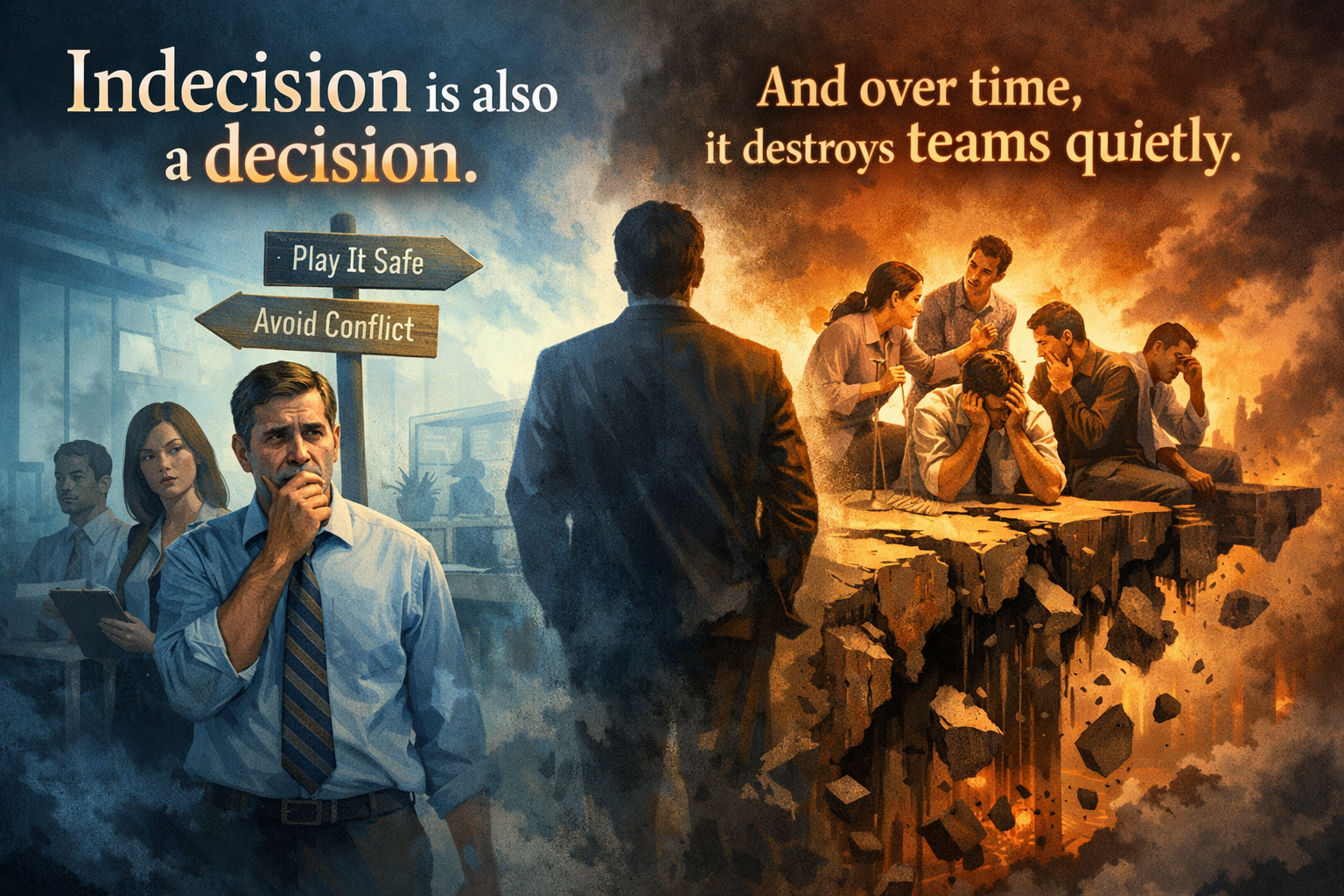
But indecision is also a decision.
And over time, it destroys teams quietly.
Soon, the strongest performers started asking for project changes.
The culture weakened.
Accountability weakened.
Trust weakened.
And eventually, even the CEO who had proudly hired the “Ivy League import” began questioning his judgment.
Because intelligence alone does not make a leader.
The ability to take hard calls does.
Have you met leaders like this?
Brilliant minds.
Excellent resumes.
Sharp communicators.
But completely uncomfortable with confrontation.
Unable to say:
“You are wrong.”
“Stop whining.”
“This behavior is unacceptable.”
“We need accountability here.”
Today, most exits are silent.
People don’t fight anymore.
They disengage.
They detach.
And then they leave.
If you’re a manager or a leader, it may be worth asking yourself:
Are you leading the team?
Or merely balancing yourself on the fence, hoping conflict disappears on its own?
Because leadership is not about protecting noise.
It is about protecting truth, fairness, and team fabric — even when it requires uncomfortable decisions.