Do you often wonder how to support your child’s development and learning at home?
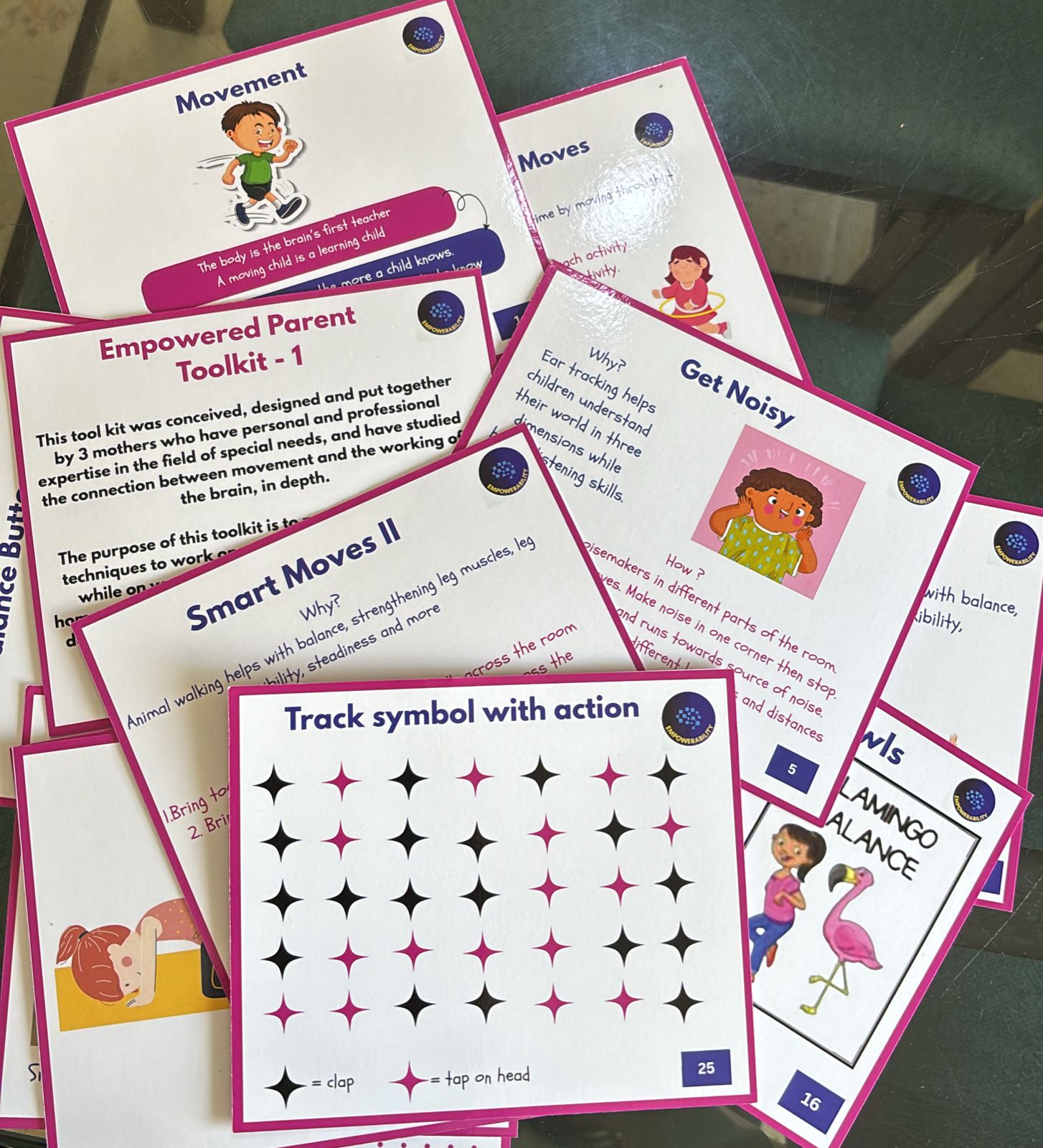
We’ve designed a Parent Kit packed with simple, fun, and effective movement activities you can do with your child. Get your Empowered Parent ToolKit 1 today to help your child.
✅ Boost focus & concentration
✅ Support motor skills and brain development
✅ Strengthen learning foundations for reading, writing & academics
✅ Create meaningful parent–child bonding moments
No extra gadgets. No stress. Just easy movements with powerful results!
Get your kit today and give your child the tools for success—while enjoying playful family time.
Do you often wonder how to support your child’s Sensory development and learning at home?
We’ve designed a Parent ToolKit packed with simple, fun, and effective movement activities you can do with your child. Get your Empowered Parent ToolKit 2 today to help your child.
✅ Boost focus & concentration
✅ Support motor skills and brain development
✅ Strengthen learning foundations for reading, writing & academics
✅ Create meaningful parent–child bonding moments
✨ No extra gadgets. No stress. Just easy movements with powerful results!
📦 Get your kit today and give your child the tools for success—while enjoying playful family time.
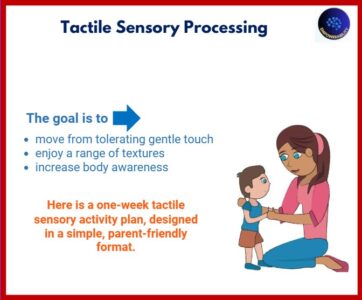
Sensory processing is necessary for the nervous system to receive, organize, and interpret information from the environment and our bodies, allowing for appropriate behavioral and physical responses. It is vital for learning, regulating emotions, developing motor skills, and navigating social interactions, directly influencing how we perceive ourselves and our surroundings.
When sensory processing is inefficient, it can lead to problems with attention, behavioral issues, and challenges in completing daily activities, sometimes resulting in sensory processing disorders and learning.
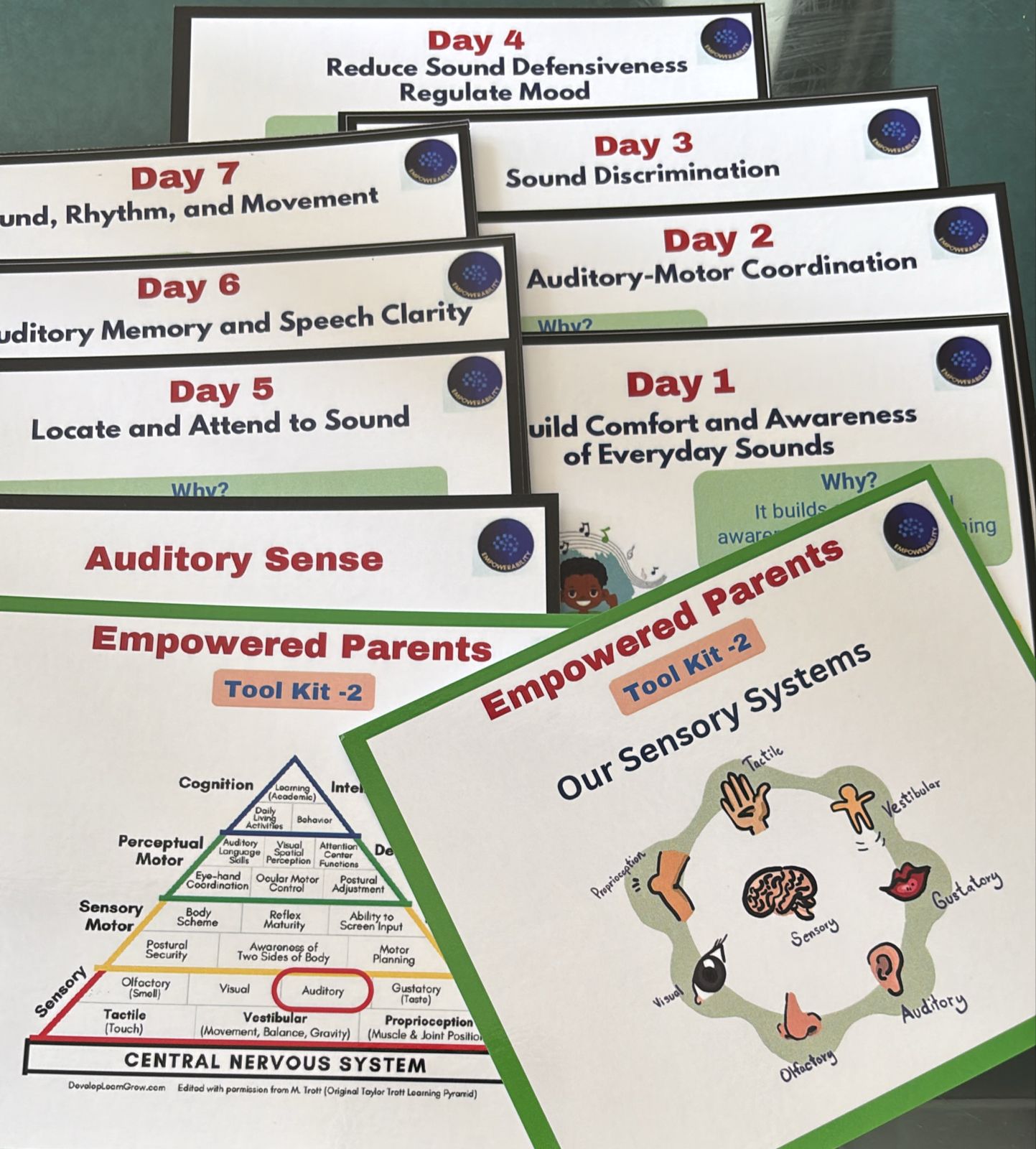
You can order our entire set showcased above, which has cards for all the 8 senses. Or, you can order individual sets, learn and then buy the next one.
Just click on "Order Now " and speak to us.
Tactile Sensory Processing provides protective information (identifying danger/pain) and discriminative information (identifying shapes, textures, and object properties). Children can exhibit Tactile Seeking (craving for touch) or Tactile Defensive (hypersensitivity to light touch) behaviour.
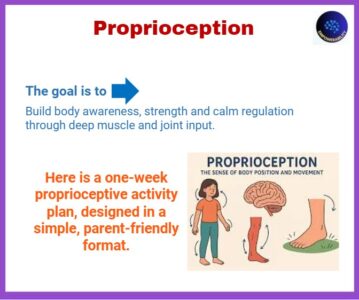
Proprioceptive input is the body’s anchor. It tells the brain ‘‘Where I am in space” and helps children feel grounded, co-ordinated and calm, especially if they are overstimulated by touch or movement.
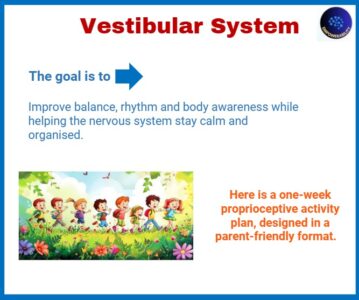
Vestibular system helps maintain our sense of balance. But it affects far more than balance. Located in the inner ear, it controls how students sit upright, stay alert and focused, track words while reading and understand where their body is in space - all essential for classroom learning.
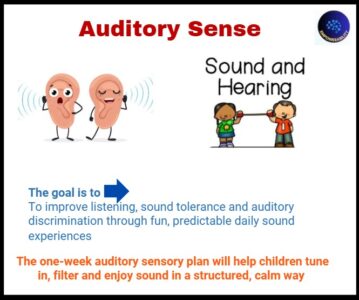
The auditory sensory system is specialized for hearing, comprising the ears (sensory organs) and brain regions that process sound, including frequency (pitch) and amplitude (loudness). Children with auditory processing differences may either be hypersensitive (find sounds overwhelming) or hyposensitive (seek or miss sounds)
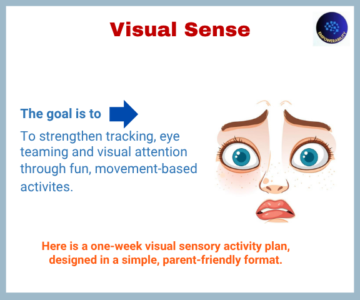
This Visual sensory plan helps children improve eye tracking, focus, visual discrimination and hand-eye co-ordination which are all essential for reading, writing and classroom participation.
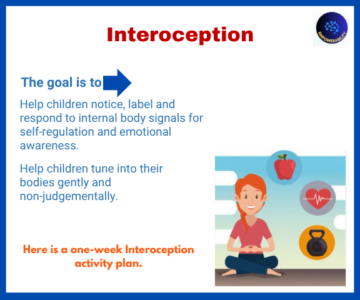
Interoception, often called the hidden sense, is our inner body awareness. It helps us recognise when we’re hungry, thirsty, tired, need the toilet or are feeling anxious or excited.
Many children with sensory processing challenges struggle to read these internal signals, which can show up as meltdowns, toileting issues or emotional outbursts.
Interoception, often called the hidden sense, is our inner body awareness. It helps us recognise when we’re hungry, thirsty, tired, need the toilet or are feeling anxious or excited.
Many children with sensory processing challenges struggle to read these internal signals, which can show up as meltdowns, toileting issues or emotional outbursts.
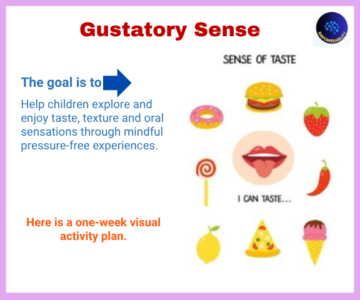
The gustatory system is the sensory mechanism for detecting taste, identifying nutrients, and avoiding toxins through taste buds located on the tongue and oral cavity.
The gustatory system could sometimes be Over-responsive or Under-Responsive, leading to feeding challenges and behaviour issues.
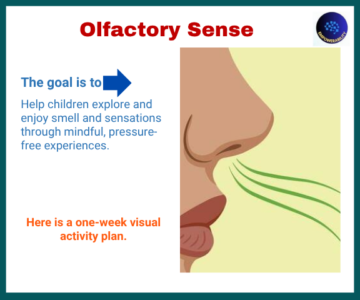
The olfactory system is the sensory mechanism for detecting smell, identifying environmental and food-related odours, and signalling safety or danger through olfactory receptors located in the nasal cavity.
The olfactory system could sometimes be Over-responsive or Under-Responsive, leading to feeding challenges and behaviour issues.
.
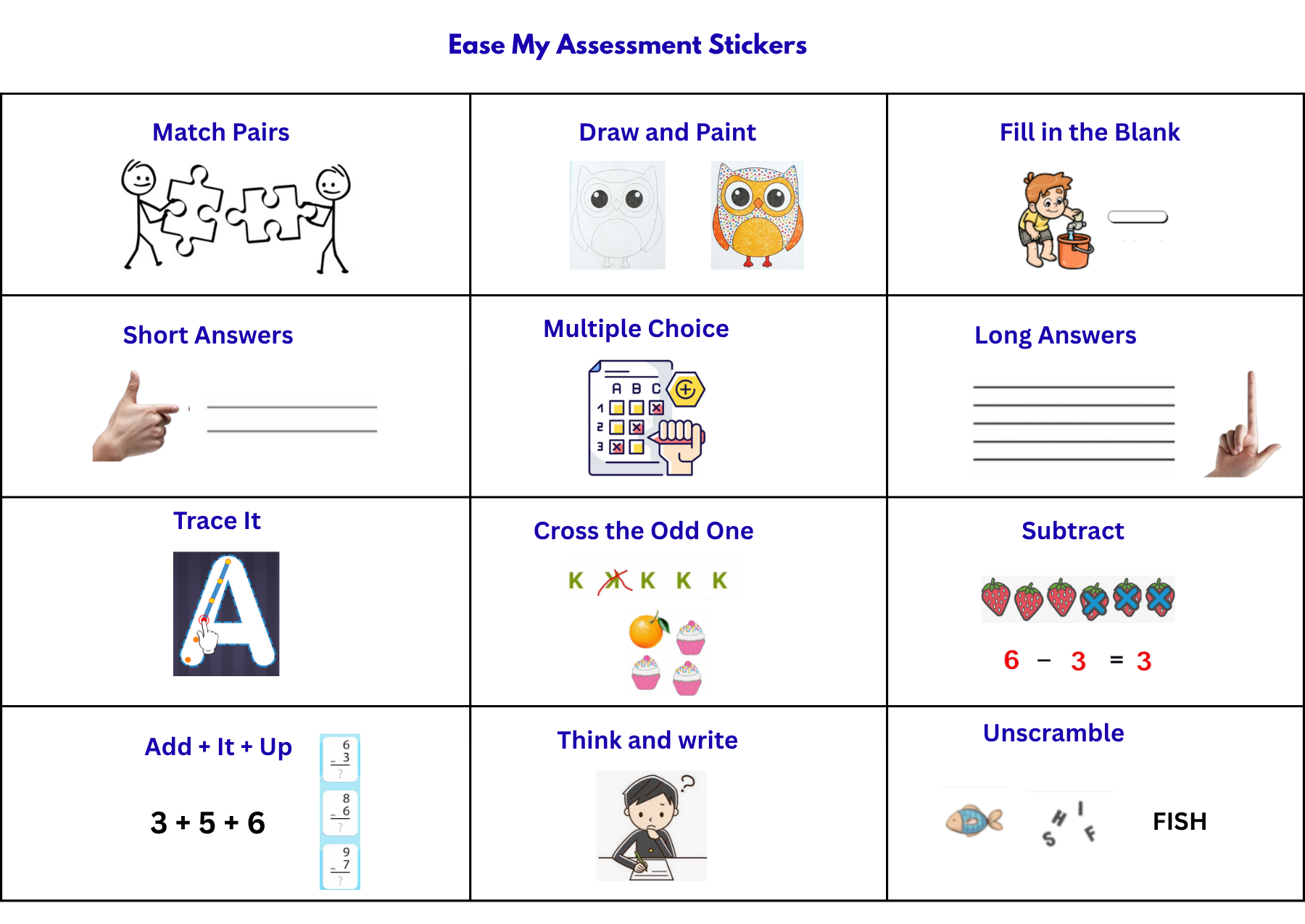
Ease My Assessment Stickers!
Little stickers, big impact 💡
These thoughtfully designed stickers make assessment questions easier to understand — helping learners with special needs feel confident, supported, and included.
We’d love to hear from schools and educators!
👉 Tell us how your students respond
👉 Share your feedback
👉 Or let us know if you’d like a version for older learners
Together, let’s make assessments accessible for every learner 💙
CHECK OUT OUR PRODUCT
Posters:
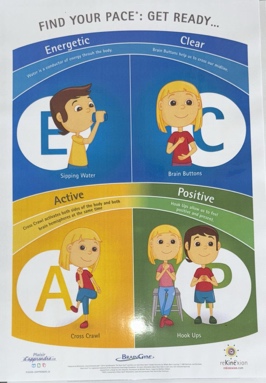
PACE
Size: A3 laminated
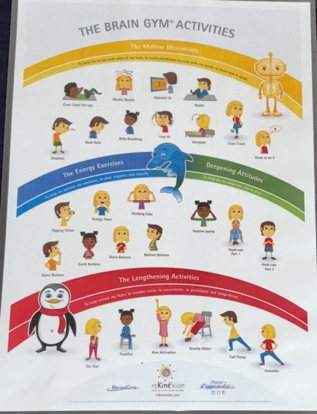
Brain Gym® Activities (Infants)
Size: A3 laminated
Size: A3 in flex
Size:20 x 27 inches
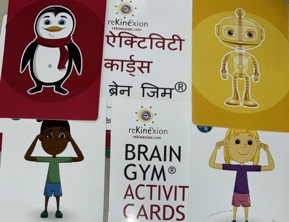
Brain Gym® Activity cards
English-Hindi
Contact us by
Email/Whatsapp