
What if changing the way we move could change the way we feel?
We often think of movement as something we do to keep our bodies fit. But movement is much more than exercise. It is one of the ways our brain and body communicate.
A simple walk can clear our mind.
Stretching can help us feel relaxed.
Dancing can lift our mood.
Playing can help a child become more engaged.
And even gentle movement can bring energy and connection to an older adult.
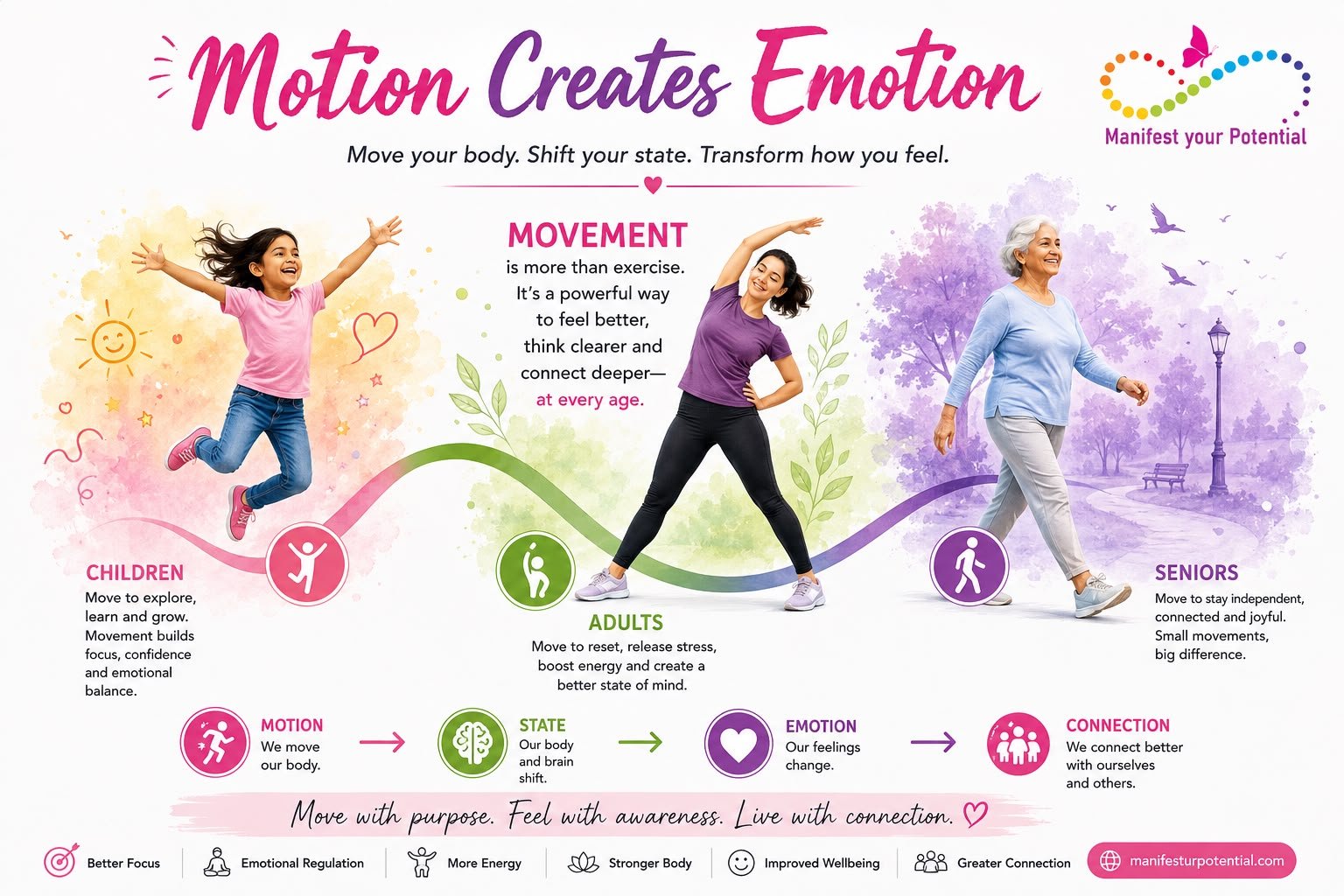
This is why motion creates emotion.
For Children: Move Before You Expect Them to Learn
Children are naturally wired to move.
They jump, climb, run, spin, crawl, swing and explore. Through these experiences, they are developing much more than muscles.
Movement provides opportunities to develop:
* Body awareness
* Balance and coordination
* Attention and focus
* Bilateral coordination
* Spatial awareness
* Confidence
* Emotional regulation
* Readiness for learning
Have you noticed how difficult it can be for a child to sit and listen when they have been sitting for a long time?
Sometimes the answer isn’t “Sit still.”
The answer may be “Let’s move!”
A few minutes of stretching, crossing the midline, jumping, walking or simply changing position can provide a valuable reset before returning to a learning task.
For Adults: Movement Can Change the State We Are In
Adults often spend hours sitting, working, driving, using screens and managing responsibilities.
When stress builds up, we may notice:
Tension → less movement → more stiffness → lower energy → irritability
Movement can help interrupt this cycle.
A short walk, a few shoulder rolls, rhythmic movements, breathing with movement, or simply getting up from the chair can create a change in our physical state.
And when the body experiences a change, our emotional experience can change too.
Sometimes we don’t need to think our way out of a difficult moment.
We may need to move our way through it.
For Seniors: Keep Moving, Keep Connecting
As we grow older, movement becomes even more important.
Movement supports independence and gives us opportunities to practise balance, coordination, strength and flexibility.
But there is another important dimension: emotion.
Moving with music, walking with a friend, reaching and stretching, playing a simple movement game or participating in a group activity can bring:
* Joy
* Connection
* Confidence
* A sense of purpose
* Greater body awareness
* Opportunities for social interaction
Movement doesn’t have to be intense to be meaningful.
Small movements, done regularly, can make a big difference.
Movement Is a Message to the Brain
Our body and brain are constantly communicating.
When we move, we receive information through our muscles, joints, skin, eyes and balance system. Our brain uses this information to understand:
Where am I?
How am I moving?
Am I safe?
What is happening around me?
What should I do next?
This is one reason movement can be such a powerful tool in learning, regulation and wellbeing.
So, What Can We Do?
Instead of asking:
“How can I make them sit still?”
Try asking:
“What kind of movement might help them become ready?”
Instead of:
“I am too tired to exercise.”
Try:
“What is one small movement I can do?”
Instead of:
“I am getting older, so I should slow down.”
Try:
“How can I keep moving safely and meaningfully?”
Movement doesn’t always mean a workout.
It can be:
🌱 Walking
🌱 Stretching
🌱 Dancing
🌱 Playing
🌱 Reaching
🌱 Balancing
🌱 Clapping
🌱 Gardening
🌱 Breathing with movement
🌱 Moving to music
🌱 Playing with a child
🌱 Taking the stairs when appropriate
Motion Creates Emotion
Our bodies are not separate from our emotions.
Movement can change our physical state.
Our physical state can influence how we feel.
And how we feel can influence how we learn, interact and participate.
So whether we are 3, 30 or 80, there is always an opportunity to move.
Sometimes the first step toward feeling different is simply…
taking a step.
Move your body.
Awaken your senses.
Change your state.
Create your emotion.